Closing the Compliance Gap: Why Modern Ransomware Protection Demands Unified Storage

The Escalating Threat: Why Your Current Backup Strategy May Be Failing
In the landscape of 2024, the digital perimeter has effectively dissolved. With the recent 2024 Thales Data Threat Report revealing a staggering 27% increase in ransomware attacks, organizations are finding that their legacy defense mechanisms are simply not keeping pace. Perhaps more alarming than the sheer frequency of these attacks is the compliance failure rate. Nearly 43% of enterprises are currently failing their compliance audits, leaving them exposed not just to hackers, but to heavy regulatory penalties and catastrophic data loss.
For many IT leaders, the disconnect lies in the siloed approach to security. When your enterprise backup solution functions in a vacuum, separated from your primary storage intelligence, you create blind spots. Modern threats require a shift toward a unified storage philosophy, where data protection is not an afterthought, but an integral layer of the storage architecture itself.
The Pivot to Intelligent, Immutable Infrastructure
Industry leaders like NetApp are currently moving toward embedding AI-driven workload monitoring directly into hardware. This shift validates what we have long advocated at Spictera: storage must be smarter. When a system can detect abnormal encryption patterns in real-time, it can trigger instantaneous snapshots before the damage spreads. However, detection is only half the battle. If your backups are accessible to the same credentials as your primary data, they are not backups at all—they are targets.
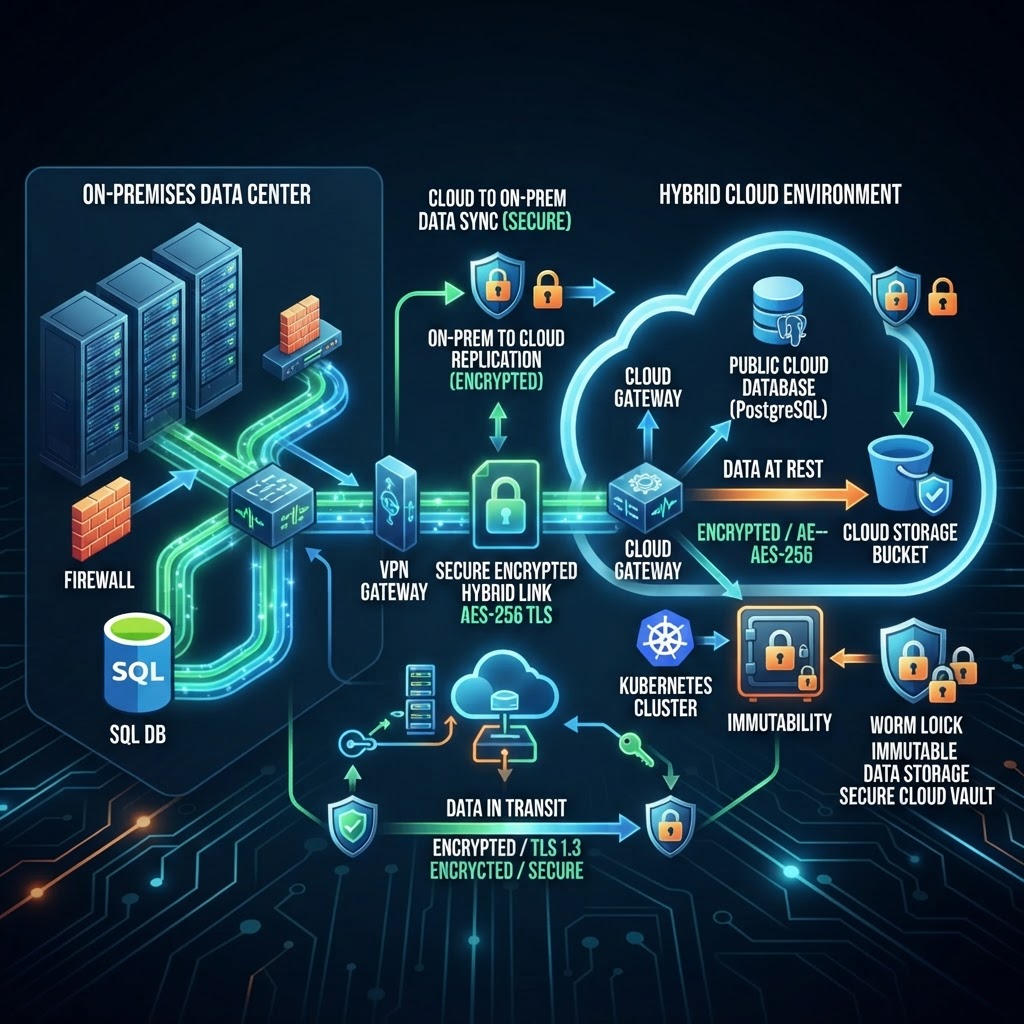
This is where immutable storage becomes the bedrock of a resilient enterprise. By utilizing WORM (Write Once, Read Many) technology, organizations can ensure that once data is written to the backup target, it cannot be encrypted, altered, or deleted by any user or malware. This is the only way to guarantee true ransomware protection in an era where administrators' credentials are frequently compromised.
Navigating the Compliance Maze
Beyond the immediate threat of data loss, GDPR compliance and data sovereignty have moved from a legal checkbox to a central pillar of business survival. When your data is scattered across SaaS, IaaS, and PaaS applications, maintaining a unified data protection policy is complex. Gartner has identified this hybrid complexity as a primary hurdle for IT departments today. A robust ransomware recovery strategy must account for geographical boundaries, ensuring that data resides where it is legally required to reside, while remaining consistently protected.
By centralizing your management plane, you don't just secure your data; you gain the automated reporting capabilities necessary to pass audits. Automated compliance logging proves that your recovery points meet the recovery time objectives (RTO) and recovery point objectives (RPO) mandated by your internal policies and regional regulations.
The Database Factor: Moving Beyond File-Level Backups
Many enterprises still struggle with legacy, manual, or script-based database backups. Whether you are managing complex database backup workflows for SQL Server, or handling the high-velocity requirements of a MongoDB backup, you cannot afford to rely on partial solutions. A true enterprise-grade strategy treats the database as the most critical asset in the chain.
To prevent the corruption of your databases during an attack, your backup and recovery software must be application-aware. This means it should handle consistency checks, transaction log backups, and granular restoration without requiring a full system wipe. Integrating these capabilities into a broader unified strategy is the only way to ensure that your business remains operational even in the face of an active ransomware attempt.
Conclusion: The Path Forward
The convergence of ransomware prevalence and failing compliance audits signals a need for a total architectural reset. Organizations can no longer rely on disparate tools for their storage and recovery needs. The future is one of integration, intelligence, and immutability. By investing in a solution that bridges the gap between high-performance storage and hardened security, you are not just buying insurance against a disaster—you are building a stronger, more compliant, and more efficient enterprise.
Is your organization prepared for the next wave of sophisticated cyber threats? It is time to audit your storage strategy and ensure that your data remains yours, no matter what happens on your network.